Make Your Keys Easier to Find Without Losing Style
There is a very particular kind of morning scramble: one shoe is on, a message is waiting, and the keys have somehow blended into a tote full of receipts, lip balm, and yesterday’s plans. The fix does not need to be a severe organizing project. A few visible cues can turn a small, easy-to-misplace object into something you notice quickly—and make the first minutes outside feel less like a scavenger hunt.
Think of key organization as a tiny styling decision with a practical payoff. The goal is not to decorate every ring until it becomes a jingle orchestra. It is to give your keys a recognizable shape, a reliable home, and a routine that works on rushed weekdays as well as relaxed weekends.
Notice where the search usually begins
Before adding anything new, replay the last three times you looked for your keys. Were they buried at the bottom of a work bag? Left inside a jacket pocket? Camouflaged on a dark entry table? Each scenario suggests a different solution. Keys lost in a roomy bag need contrast and a point of attachment. Keys left around the house need one obvious landing place. Keys that travel between bags need a quick transfer ritual.
Try a one-week observation instead of guessing. Keep a note on your phone or a scrap of paper by the door: bag, coat, counter, or somewhere stranger. At the end of the week, choose the pattern that appears most often. This keeps the setup pleasantly simple. A bright charm will not solve a habit of setting keys on five different surfaces, while a designated bowl will not help much if your keys spend most days inside a shoulder bag.
Choose a marker you can recognize at a glance
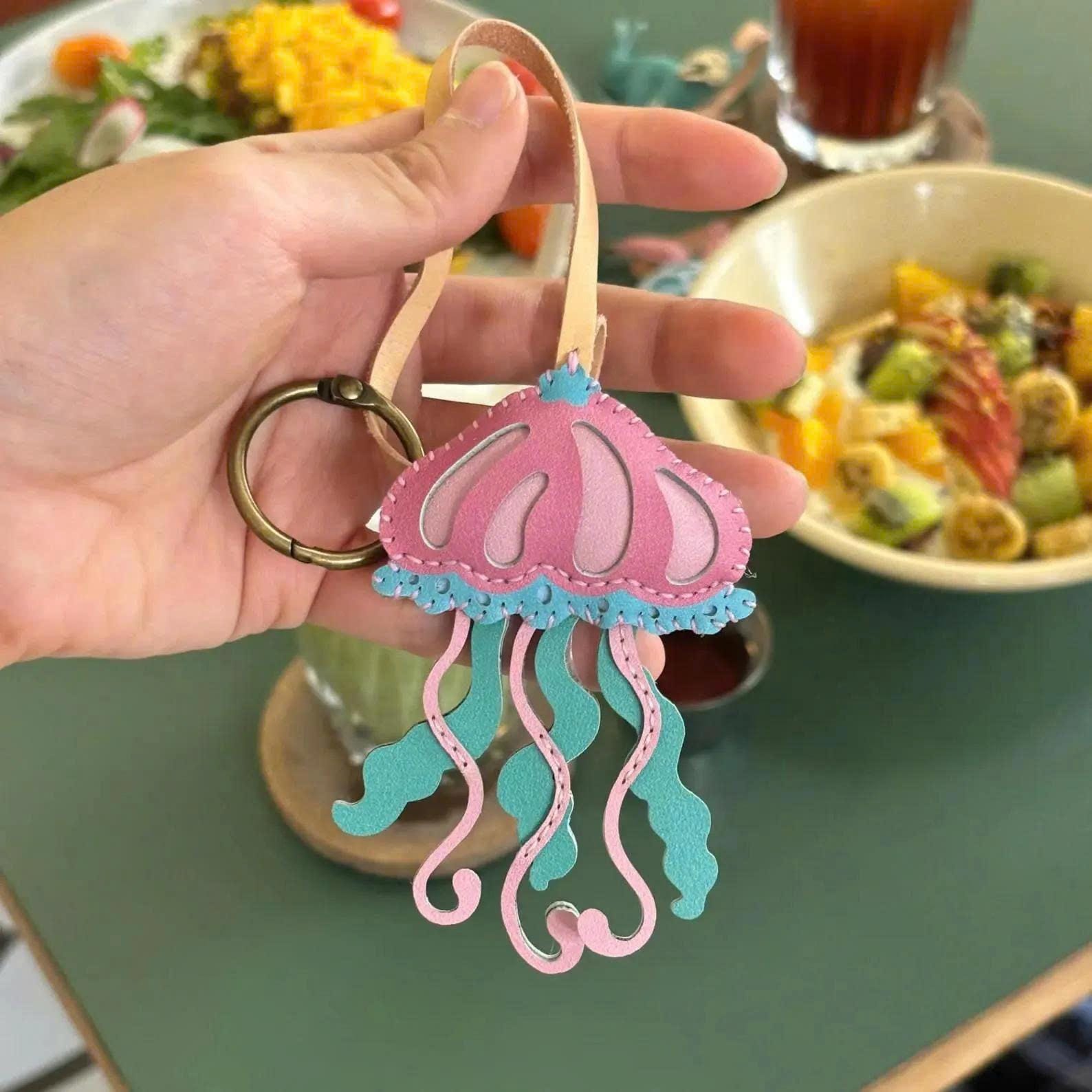
An easy to find keychain works best when it gives your eye one memorable detail. That might be a cheerful character, an unexpected silhouette, a bold color, or a soft-looking accent that stands apart from metal keys. Look for a shape you can describe without thinking: “the little seal,” “the cherry-red loop,” or “the striped tag.” If you can picture it from across the room, you are more likely to spot it when it peeks out of a crowded tote.
Scale matters too. A small ring with nothing attached can disappear under a notebook; a large cluster can feel distracting in a pocket. Aim for a marker that adds presence without turning your key ring into a bundle of unrelated objects. Browsing the full accessories collection can help you compare personalities and decide what feels like you rather than what merely catches your eye for a second.
If you like a playful detail, consider the seal bag charm as a visual landmark for a set of keys or the zipper area of the bag that carries them. A character-led accent makes the cue easy to remember: when you see the seal, you know you have found the essentials.
Make one home base impossible to ignore
Give your keys a stop that sits on the route between arriving home and doing anything else. For one person, that is a small tray beside the front door. For another, it is a hook near a favorite mirror, a dish on a bookshelf, or a shallow box on the console. The best spot is not necessarily the prettiest corner in the room; it is the place your hands naturally pass after you close the door.
Make the landing zone visually distinct from the surfaces around it. If the hallway is all pale wood and cream walls, a patterned dish or colored tray creates a clearer signal. Keep the space reserved for the few things that leave with you—keys, transit card, perhaps sunglasses—so it does not turn into a general-purpose pile. When an object has a single job, it is easier to trust it.
For shared homes, give each person a separate section rather than a shared heap. Initials are optional; different colors, shapes, or small dishes can be enough. The win is immediate recognition, not a formal labeling system.
Build a handoff routine for bags and pockets
Most key searches happen during transitions: coming in tired, changing jackets, or switching from a weekday tote to a smaller weekend bag. Create a two-step handoff. First, remove your keys before unpacking the rest of the bag. Second, place them either in the home base or in the next bag—not on a nearby chair “just for now.” This is a tiny rule, but it removes the decision that tends to create chaos.
A bag can also have its own key zone. Clip or tuck the keychain near the same internal pocket every time, then return it there after use. If you carry a bag with a key leash or outer clip, use it consistently rather than only on busy days. When you are shopping for a companion piece, take a look at new arrivals with the same question in mind: will this help you create a recognizable place for the things you reach for first?
Before sleep, do a 15-second exit check: keys, phone, wallet, and whatever you need for tomorrow’s first stop. It is less about being perfectly organized than reducing the number of mysteries waiting at 8:12 a.m.
Let the useful detail feel personal
Practical accessories do not have to look like office supplies. A keychain can echo a favorite color, a silly in-joke, a season, or the small animal character that makes you smile while you lock the door. That little bit of personality is useful because memorable objects are easier to notice and easier to miss when they are not where they belong.
For more gift-sized styling ideas, browse small surprises for hosts, see how a charm can work in bag charm style for festivals, or save thoughtful small gifts for friends for the next occasion. Then choose one change to try this week: a more visible marker, a clearer landing spot, or a better bag handoff. The most effective system is the one you will actually repeat—preferably before the coffee gets cold.