Small Accessories for Smaller Bags
A smaller bag exposes every unnecessary thing you carry: the spare lip product, the cable with no device to charge, the receipts that migrate from one outing to the next. That can be freeing. Instead of “What if?”, ask, “What will I actually use between leaving home and coming back?”
The answer changes with the plan. A gallery afternoon, a quick coffee before work, and dinner across town do not need the same little collection of things. The aim is not to make a tiny bag feel like a suitcase. It is to give it a clear role. This compact-carry guide uses small bag accessories to keep the essentials reachable while leaving room for a bit of character.
Start with the moments that make you reach inside
Set your usual bag contents on a table, then replay a normal outing. At a checkout, what needs to appear quickly? At the door, what do you look for while holding a drink? These moments determine the order of your carry better than a checklist does.
For most small bags, the core is simple: phone, payment, identification, keys, and one personal item. Put the card holder or transit pass where it is easy to grab. Let the phone have a consistent flat spot. Give keys a designated corner instead of allowing them to slide underneath everything else. A bag with a narrow opening especially benefits from this order; finding an item should not require removing three others first.
Separate true needs from comfort extras. Earbuds may be essential for a long commute but unnecessary for a neighborhood errand. A hair tie may earn its space before an outdoor dinner. Carry the helpful extra for that day, rather than a pile of possibilities.
Choose flat, useful pieces before cute filler
Shape matters as much as size. A slim card case rests easily beside a phone, while a bulky wallet can claim most of the interior. A folded note or small list travels almost invisibly. Round objects occupy more space than they seem to when they are sitting on a dresser, and a long key ring can snag as you search for something else.
If you use a pouch, reserve it for genuinely loose bits: bobby pins, coins, or a bandage. It should gather a small category, not create another object to maneuver around. Can you remove the phone, pay, and put everything back without stopping to reorganize?
A mini mirror, a folded reusable bag, or a compact pen can be worthwhile when it fits your routine. But duplicates are often the first things to go. Two lip products, two cables, or a backup card holder may sound prepared and still make a small bag frustrating. Save one flexible space for the day’s plan, and let the rest stay light.
Put the playful detail on the outside
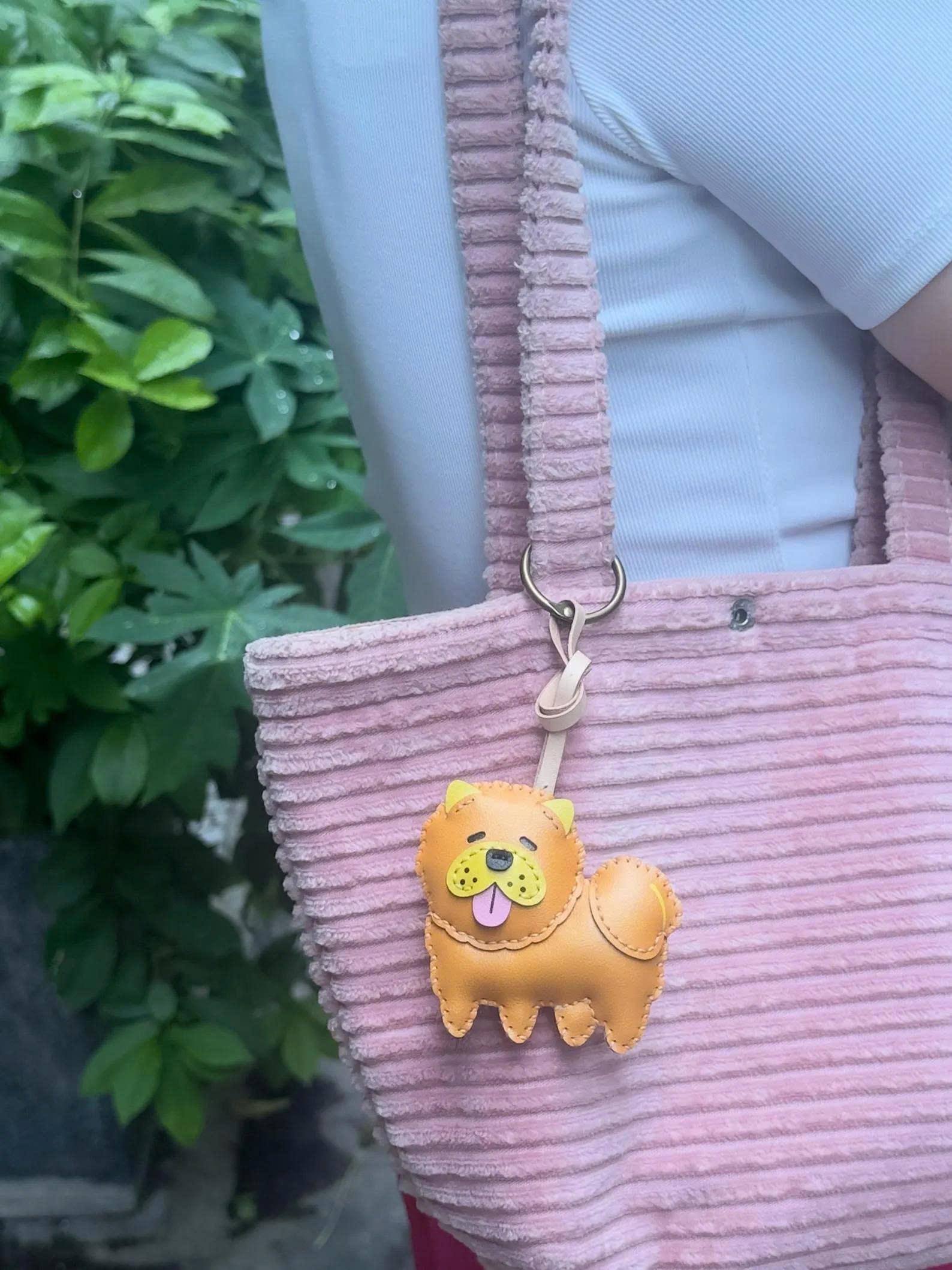
When interior space is scarce, the exterior can supply personality. One bag charm or character keychain gives a familiar bag a recognizable cue without competing with essentials inside. It can make a plain crossbody easier to spot on a café chair. Browse the full collection with scale in mind: the charm should suit the bag.
A single detail often looks more intentional than a cluster. Clip it where it does not block the zipper pull or sit directly under your arm. If the bag has visible metal details, look at the clasp, chain, and buckle before choosing a finish or color direction. The guide to bag charm hardware pairing offers a helpful way to start that comparison.
For a plain black mini bag, a cheerful accent can be the whole outfit punctuation. For a bag with a bold print, a smaller, quieter piece may be enough. The animal keychain bag charm is a playful option if you want one visible focal point. Choose something you enjoy seeing when you pick up your bag, then leave the rest of the exterior uncluttered.
Use a ten-second reset between stops
Small bags stay pleasant when they are reset before they become messy. Each time you leave a café, desk, or friend’s place, return the card case to its slot, put keys in their home, and check that the phone is not loose near the opening. It takes only a few seconds, yet it prevents the end-of-day rummage that makes a petite bag feel more difficult than a large one.
It also helps to have two ready versions of your setup. A weekday edit may give the flexible slot to a transit card and earbuds. An evening edit may swap those for lip color and a compact touch-up item. The bag remains familiar, but its one open space is useful to the occasion. For another perspective on light, practical carries, read accessories for daily commuters.
If you regularly switch bags, transfer the core pieces as a group. A small tray near the door can hold phone, card case, and keys between outings, preventing the discovery that your cards are still in yesterday’s bag.
Finish with the one-hand door test
Before you go, lift the bag, close it, and imagine paying with one hand. If it feels crowded, take out the weakest item—often an extra cable, second cosmetic, or unused just-in-case object. A small bag should make a plan easier, not demand constant strategy.
New pieces can add a fresh note to your edit; explore new arrivals when you want inspiration. But often the most satisfying update is simply one useful inside item and one expressive outside detail. If you are selecting a compact add-on for someone else, see our ideas for gifts for new home keys. Keep what helps, skip what merely fills space, and let your small bag move through the day as lightly as you do.