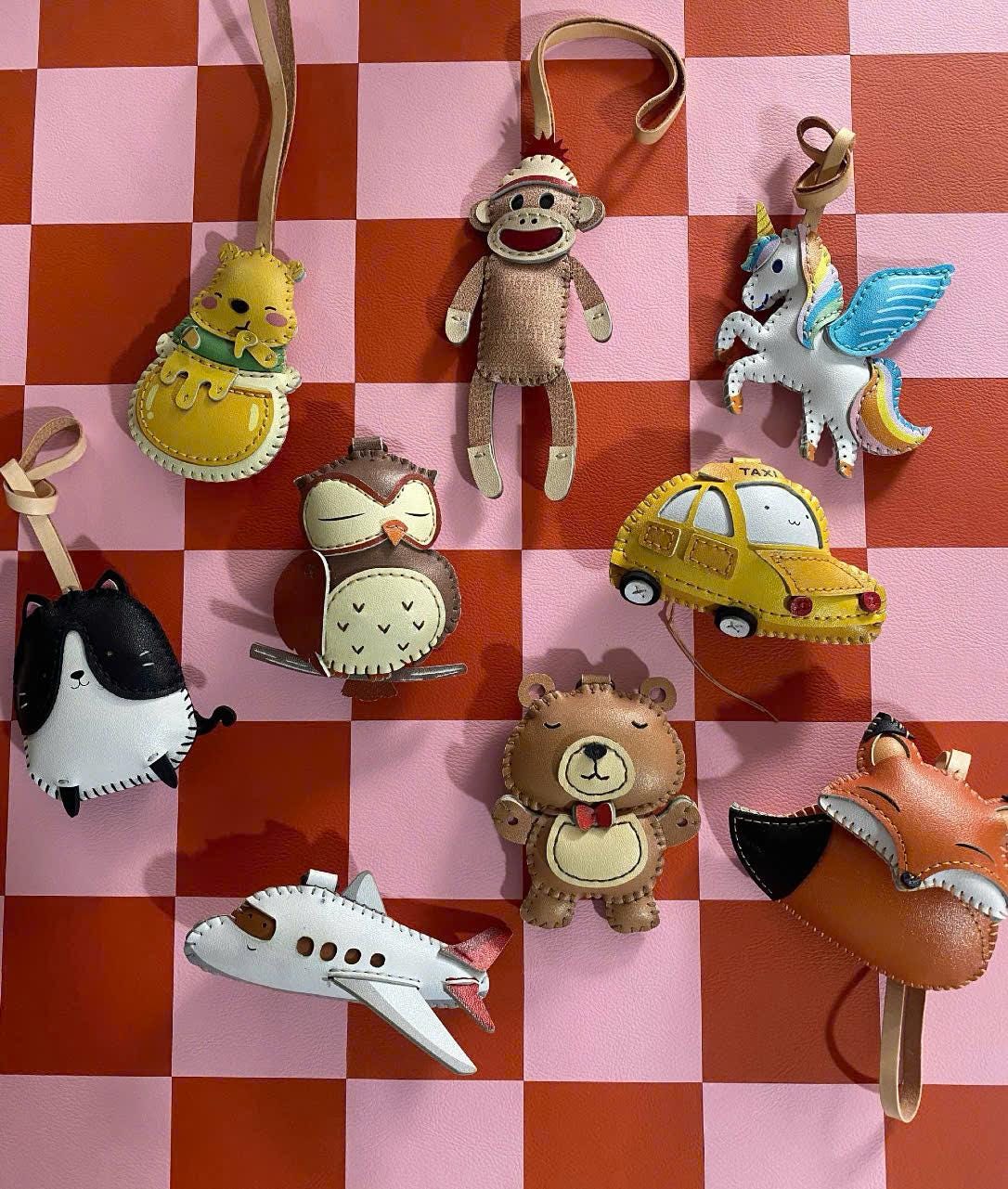
Start a Bag Charm Collection with a Point of View
A bag charm does not have to be a random souvenir dangling from a zipper. It can be a tiny decision about how you want your everyday things to feel. The best bag charm collection is not necessarily the biggest one; it is the one that makes you pause for half a second before leaving home and think, yes, that is the mood today. A small animal on a work tote, a bright shape on a plain crossbody, or one familiar character on a travel pouch can become a useful visual cue: this bag belongs to a particular person.
Instead of starting with a shopping list, start with a point of view. Maybe yours is “quietly funny,” “weekend market,” “animals with attitude,” or “little bursts of color against navy bags.” That phrase is not a rulebook. It is simply a filter that keeps a collection from turning into a drawer of disconnected extras.
Choose a first charm that says something specific
Pick the piece you would still notice after the novelty wears off. A dog lover might begin with a pug bag charm, not because every future piece must be canine, but because it establishes a wink. Someone who wears mostly black might choose a charm with a strong silhouette rather than a dozen muted designs that disappear against the bag.
Picture the ordinary moments where it will show up: swinging a tote onto a café chair, pulling a key pouch from a coat pocket, or setting a commuter bag beside a desk. If the first choice feels at home in those scenes, it has a better chance of becoming a favorite than an item chosen only for a perfect product photo. Browse the full accessory mix with that real-life scene in mind.
Build in families, not perfect matches
A collection looks considered when its pieces have a few points of conversation. That does not mean buying duplicates. Think in loose families: animals, tiny foods, cheerful faces, soft pastels, red accents, or charms that make an everyday object look less serious. One pigeon-like character, one pug, and one fruit-shaped piece can sit together if the common thread is playful city wandering.
Give yourself two anchors and one curveball. The anchors are the styles you reach for often: perhaps a small animal and a simple color pop. The curveball is the piece that is slightly louder, stranger, or more sentimental. On a predictable Monday, the anchor keeps the bag feeling polished. Before a casual dinner or a long train ride, the curveball can change the whole impression without asking you to change the bag itself.
Scale matters in an everyday way, too. If a charm already makes a statement on a compact shoulder bag, let a second piece live on a different item rather than crowding the same hardware. A larger tote can take a more layered look, while a slim pouch often needs just one detail. The aim is recognition, not noise.
Assign each charm a job
Collections stay useful when each piece has a home. Try naming a few roles rather than sorting by color alone. Your “errand charm” might be cheerful enough to make a reusable shopping bag feel less forgettable. Your “workday charm” could be the smallest option, clipped to a laptop sleeve or tote. Your “away-day charm” might be the one that helps you spot your bag quickly among friends’ similar pieces.
This approach also stops every new find from competing for the same zipper. Keep one charm on the item you use daily, another on an occasional bag, and a couple in a small tray where you can swap them in. When you want a fresh addition, look first at what role is missing. The new arrivals page can be a pleasant place to look for that gap rather than an excuse to collect at random.
Make the rotation part of the fun
A charm earns its place by being seen. Rotate yours at transitions that already happen: the start of a new week, the first day of a trip, a change of handbag, or the arrival of a favorite coat. A three-minute switch can make an old bag feel newly chosen. It also lets sentimental pieces take turns instead of leaving one permanent favorite to do all the work.
There is no need to make rotation ceremonial. Lay two or three options near where you keep keys, then choose by outfit, plans, or energy level. A bright charm can lift an all-denim outfit; a small character can make a tailored bag feel friendlier. When a combination feels especially right, take a quick photo for yourself. Over time, those snapshots become a more reliable styling reference than a rigid set of rules.
Let the collection tell a continuing story
For a gift, a charm works best when it adds to a person’s existing point of view rather than trying to invent one for them. Notice whether they carry a particular color, laugh at animal illustrations, or always lose sight of a plain travel pouch. A small note explaining why you chose it can make the gift feel observant without making it overly formal. For more wording ideas, see a gift note for a small accessory.
Your collection can shift as your routines shift. A new commute may call for a detail on a dependable tote; a shared love of animals may inspire a personal signature. Explore ideas for accessories for daily commuters or consider how animal keychains become personal signatures. The point is not to finish the collection. It is to make each addition feel like another sentence in a story that is recognizably yours.