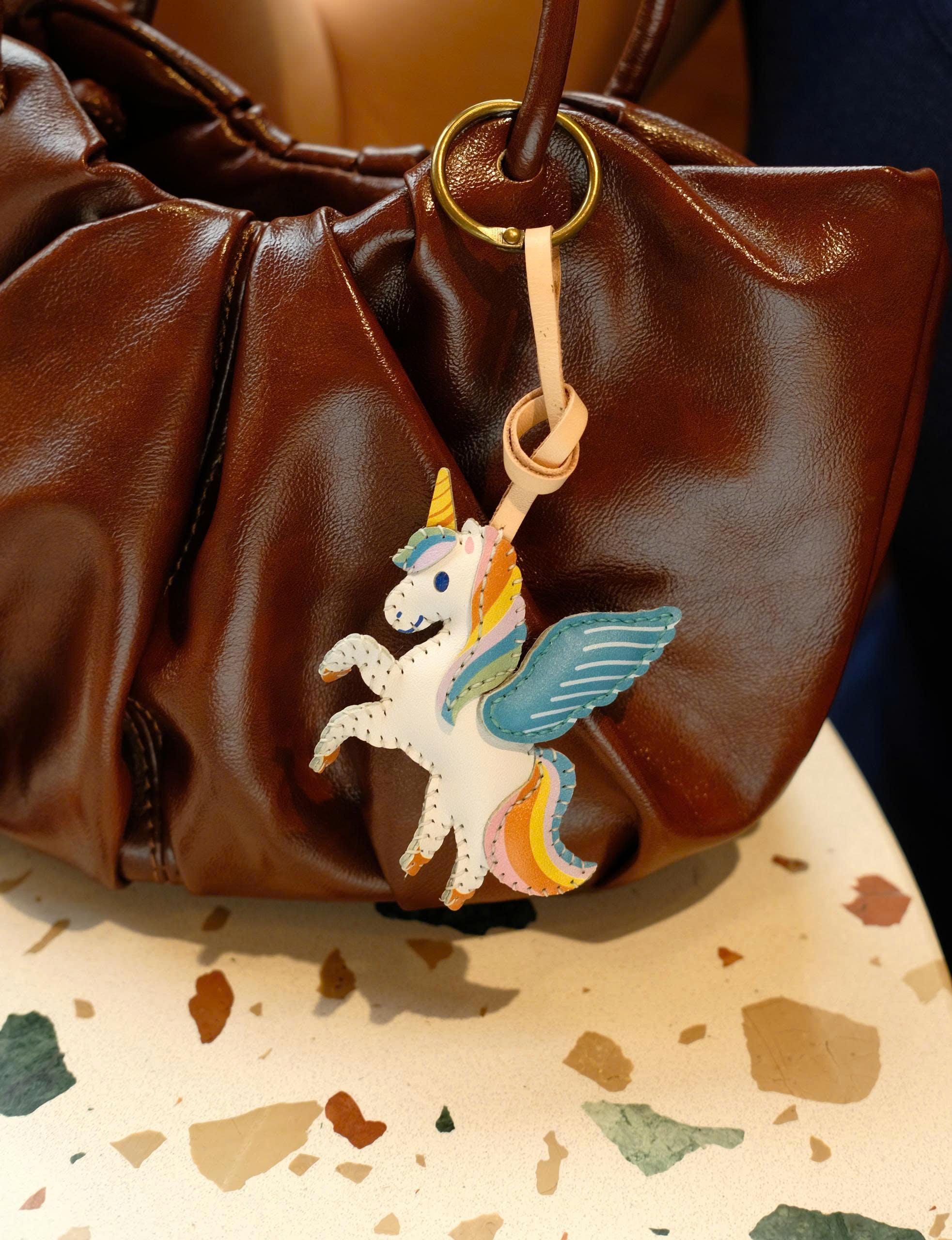
How to Write a Gift Note for a Small Accessory
A tiny accessory can create an oddly big pause at a gift exchange. Someone opens a little pouch, spots a bag charm or keychain, and looks up as if to ask, “Why this?” The answer does not need to be a speech. It can be three well-chosen lines on a card. That is the quiet job of a gift note: it turns a playful object into a remembered moment.
The best gift note ideas do not try to prove that the present is grand. They give the recipient one clear connection to it: a shared joke, a coming trip, a daily ritual, or simply the fact that you noticed their taste. Use this guide to write a note that feels like it came from you, whether the accessory is going into a stocking, a birthday bag, or an ordinary Tuesday surprise.
Begin with the moment, not the item
Before writing, picture when the person will meet the gift. Maybe your sister will open it at the kitchen table before a weekend city break. Maybe a colleague will find it taped to the inside of a farewell card. Maybe a friend will unwrap it after saying, once again, that every tote bag they own looks too serious. That scene gives you more useful material than a list of product features.
Start with a line that locates the relationship: “For the friend who makes even a coffee run an outing,” or “A little something for your next big-plan day.” Then let the accessory enter naturally. A Statue of Liberty–inspired keychain, for example, can point to a favorite New York memory, an upcoming visit, or a fondness for landmarks—not a sweeping declaration about what the gift is supposed to mean.
If you are still choosing, browse the full accessory collection with that person’s everyday scene in mind. A useful note begins long before the pen touches the card.
Choose one detail the recipient will recognize
Specificity beats sentiment piled high. “I saw this and thought of you” is warm, but it lands more clearly when followed by the reason. Think of the detail only that person would immediately place: the way they name every airport snack, their running commentary on taxi rides, the tiny souvenir shelf by their desk, or the oversized ring of keys they are always hunting for.
Keep the detail friendly rather than forensic. “For your very dramatic search for your keys every morning” may make a roommate laugh; “Because you lose your keys constantly” may not. Let the joke carry affection, not a critique. If the accessory is a travel-themed bag charm, a note can say, “For your bag, until the next stamp in your passport,” without making the gift sound like an assignment.
For a visual prompt, look at the travel-inspired bag charm and keychain and name the first detail it brings to mind. Your own association is more persuasive than borrowed gift language.
Match the note’s voice to the relationship
A small card gives you room for one emotional register. Pick it before you draft. With a close friend, an inside joke can do most of the work. For a newer friend, a simple observation is kinder than pretending to share a long history. For a coworker, keep the warmth professional and the message easy to read in front of others. For a partner, a small accessory can be a chance to write something tender without turning the card into a novel.
Try the “one beat, one wish” pattern. The first beat names the connection; the second offers a wish. For example: “You never travel without a story. Here’s one small companion for the next chapter.” Or: “Your bag deserved a little personality. Hope this makes you smile on the way out the door.” Two sentences are often enough.
Do not force a joke because the object is playful. A sincere “Thinking of you and your next adventure” is better than a punchline that does not sound like you. Read the note aloud once; if you would not say it across a café table, simplify it.
Use these short note frameworks as a starting point
Rather than copying a grand message, borrow a shape and fill it with your own detail. These three frameworks work especially well on a small card:
- The shared-memory note: “This made me think of [place/moment]. Keep it close until we can do that again.”
- The everyday-cheer note: “A small extra for [their routine]. Hope it adds a bit of fun to the usual rush.”
- The next-chapter note: “For wherever you are headed next—big plans, small errands, and all.”
Change at least two words in any framework so it becomes yours. Replace “fun” with the kind of word you actually use. Add the neighborhood, trip, snack, song, or phrase you share. If you need more inspiration, the stories in accessories for travel lovers and playful accessories for everyday style can help you find an angle without dictating your voice.
Finish with a simple presentation
Write the note on a card small enough to sit with the accessory instead of competing with it. Fold it once, tie it to a gift bag, or slip it under the tissue paper so the recipient sees the words near the gift. A name, a date, and your signature make even two sentences feel complete. If handwriting makes you hesitate, print neatly; care is clearer than perfect lettering.
Then stop. Resist adding a paragraph to explain every intention. A small accessory is allowed to be lighthearted, and the note only needs to open a door to the feeling behind it. For more ways to think about the story a charm can carry, see bag charm collection with purpose. When you are ready to pair your words with something new, browse new arrivals—then write the line only you could have written.